

The screen beeps with a flash of light, and Aminah rushed to peep overs her phone to see what came up. It can be an important email from the office, a text from a buddy, or even a notification from Instagram. This constant connectivity keeps her informed about work, family, friends, and even the outside world; however, she gave out a long sigh and feels strangely empty inside. Such continuous beeps and flickering of modern devices are keeping us updated with current news and events, still, most of us feel like Aminah that these are stealing our precious moments. Moments of happiness that come by touching raindrops, feeling the warmth of sunlight, or gazing in amusement at the moon. There is always a fear of missing out, yet we can perceive that we have been trading presence for pixels.
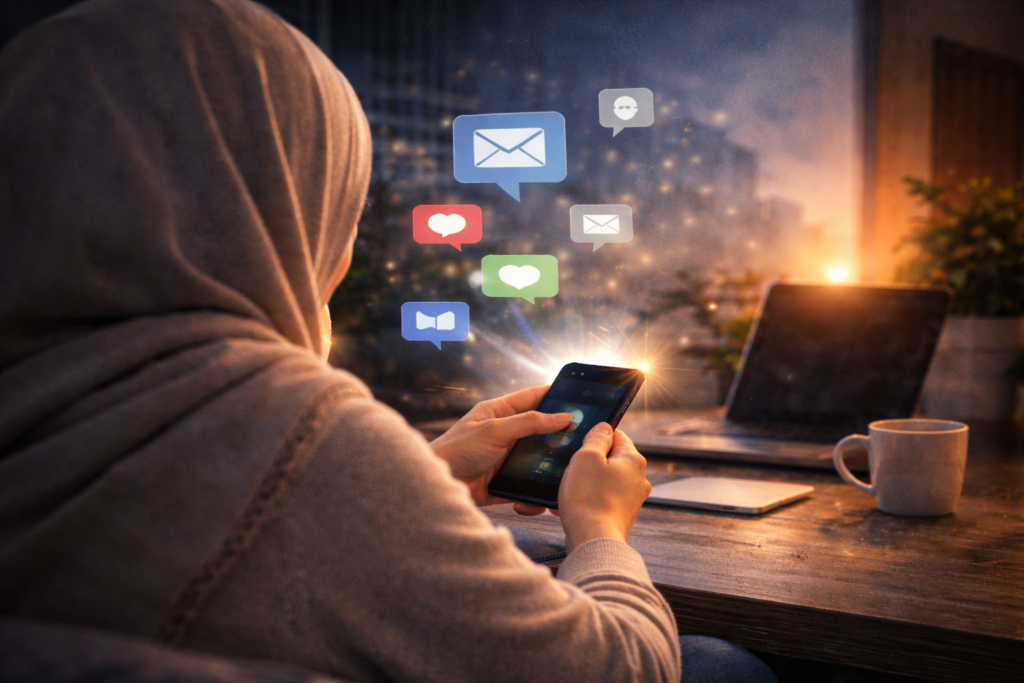
With robust technological advancement, innovation in automation, and a variety of emergent electronics, contemporary human life has become immensely intricate. People have become used to smartphones ringing, the sounds of texts/notifications, and scrolling endlessly immediately after waking up in the morning. In 2025, approximately 6 billion people, which consists of two-thirds of the world’s population, had access to the internet (ITU, 2025). Smartwatches, headsets, and AI assistants are deliberately keeping us engaged virtually by managing our daily activities, from scheduling a meeting to playing our favorite music track. Globally, individuals spend an average of 6 hours and 40 minutes daily looking at screens, with Gen Z spending a considerable amount of time (roughly 9 hours per day) on digital devices.

However, such prolonged exposure to online activities and devices has the potential to turn into significant mental and physical complications, leading to digital fatigue. This physical, emotional, and psychological lethargy due to prolonged engagement with electronic devices and medias are usually triggered by ringtones, notifications, beeps, screen light flickers, and automated videos. The exhaustion from long hours of screen time and less physical movement causes a higher chance of sleep disruption and obesity. Eye strain, back pain, headaches, and blurred vision are some of the familiar outcomes of heavy technology use. Furthermore, endlessly switching between different electronic devices can increase cognitive overload and pressurize the brain to multitask. As a result, focusing on a particular task becomes harder, which curtails productivity. According to a Digital Life Survey conducted by the Human Clarity Institute in 2025, reported that 70 percent of participants said that long periods of digital activity leave them feeling tired, drained, or drowsy. Anxiety and irritability have also been observed, which makes it difficult to think clearly and find creative solutions to complex problems.
A survey by Deloitte (2023) claims that the majority of respondents within 18-40 years are worried about the impact of technology on their biological and emotional wellbeing than older generations. Moreover, there is also tremendous pressure in modern work systems, leading us to further procrastination, fatigue, and restlessness. It has become common for the majority of human beings to complete household work with a variety of affordable electronic tools like vacuum cleaners, washing machines, or grinders, which not only reduces their physical activity but also builds a sedentary lifestyle. In addition to that, pollution, heavy traffic noise, and a lack of connection with nature add up to the turmoil, worsening physical health, and degrading psychological well-being.
In spite of all these, the solution remains simple, which is spending more time with nature. Walking barefoot on earth, bathing in the sun, and taking care of plants can bring back mindfulness. Focus, creativity, and enthusiasm are enhanced, which brings better cognitive and physical performance. Wild, green spaces can remarkably calm down the mind, regulate circadian rhythm, and improve energy, all of which can enrich fitness and contribute to overall well-being.

It has been asserted by researchers of Quebec University in a 2024 study that spending two hours per week strikingly reduced emotional distress among 10–12-year-old school students. They further argue that nature offers exciting benefits to the intellectual and psychosomatic state of human beings. The fascinating interaction in nature can grab attention without causing fatigue, providing instant connection and relaxation. Studies have even found that listening to bird songs can uplift mood and alleviate negative feelings. Spending sufficient time in nature actively can quickly reverse the adversities of digital fatigue; gardening, walking, or simply bird watching with close friends and family members not only increases physical activity, it also strengthens social connections and moderate chances of chronic health distresses like blood pressure, heart problems, or musculoskeletal disorders, along with stress, depression, or anxiety. Watching natural scenery can bring joy, ingenuity, and better sleep, sharpening the mind and concentration to successfully complete any task.
It is high time that we realize the impact of virtual reality on our health and future well-being. Stepping out to the natural environment does not shut doors to the digital world; it reminds us of the journey back to balance as part of human life.

References
American Psychiatric Association. (2024, November 25). Get outside: The many ways nature can boost your mental well-being. Psychiatry.org. https://www.psychiatry.org/news-room/apa-blogs/ways-nature-can-boost-your-mental-wellbeing
Deloitte. (2023, September 5). Digital life often delivers daily benefits, but can also fuel tech fatigue and well-being worries. Deloitte Insights. https://www.deloitte.com/us/en/insights/industry/telecommunications/connectivity-mobile-trends-survey/2023/connected-consumers-digital-fatigue.html
Digital fatigue and energy. (2026, March 1). Human Clarity Institute. https://humanclarityinstitute.com/reports/digital-fatigue-and-energy-full-report/
Global number of Internet users increases, but disparities deepen key digital divides. (2025, November 17). ITU. https://www.itu.int/en/mediacentre/Pages/PR-2025-11-17-Facts-and-Figures.aspx