In a world defined by speed, extraction, and constant noise, many people feel a deep longing for something different — a life that is more grounded, meaningful, and connected.
Sukun is an answer to that longing.
The word sukun conveys peace, stillness, and inner calm. But in our work, Sukun represents something larger: a movement to restore harmony between humans, land, and community.
It is not just an idea.
It is a way of living, learning, and regenerating the world around us.
A Regenerative Vision
Modern civilization often treats nature as a resource to exploit. Soil becomes a commodity, forests become timber, and land becomes property.
But Sukun begins from a different understanding:
The Earth is not a resource.
It is a living trust.
Our relationship with land should be based on care, stewardship, and responsibility. Through regenerative practices such as permaculture, ecological restoration, and community stewardship, Sukun seeks to rebuild living systems rather than extract from them.
Regeneration means healing the soil, restoring ecosystems, and renewing culture at the same time.
Faith, Nature, and Tawḥīd
At the heart of Sukun lies a spiritual foundation.
In the Islamic tradition, the principle of Tawḥīd reminds us that all creation is part of a single, unified reality. Humans are not separate from nature; we are participants in a divine balance.
The Qur’an repeatedly reminds humanity that the Earth is a sign, and that humans are stewards (khulafā’) entrusted with its care.
For Sukun, ecology is not only science or activism — it is also an ethical and spiritual responsibility.
Caring for land becomes an act of worship, and living gently on Earth becomes part of faith.
Learning for a Regenerative Future
Education plays a central role in the Sukun vision.
Much of modern education separates knowledge from life. Students learn theories but remain disconnected from land, community, and practical skills.
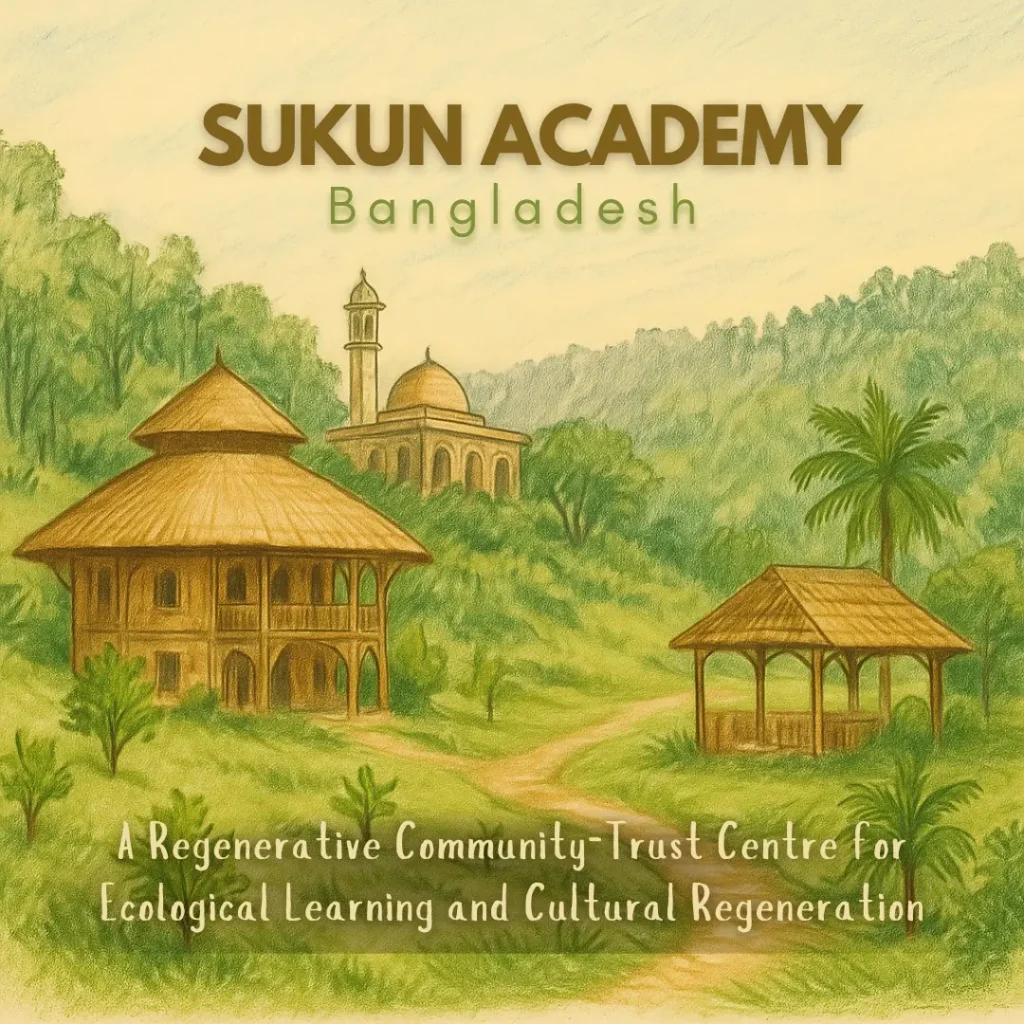
Sukun Academy Bangladesh seeks to reimagine learning by reconnecting education with the real world.
Here, learning is:
- Experiential – rooted in direct engagement with land and ecology
- Skill-based – focused on practical abilities that support regenerative living
- Community-oriented – grounded in collaboration and shared responsibility
- Ethically guided – informed by spiritual and moral values
The goal is to prepare people not simply for jobs, but for meaningful participation in a regenerative society.
Community and Ecological Living
Sukun also explores how communities can live in deeper harmony with land and with each other.
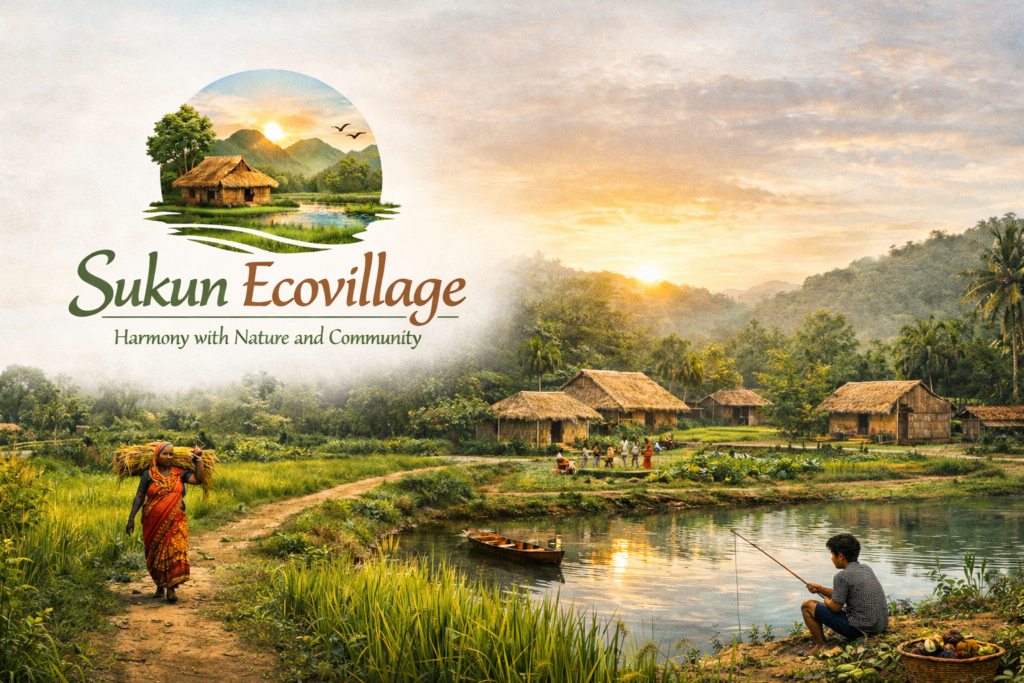
Projects such as Sukun Ecovillage aim to demonstrate what a regenerative community could look like — a place where food, shelter, governance, and culture are designed in balance with nature.
In such communities:
- land is stewarded responsibly
- decisions are made collectively
- Resources are shared ethically
- Life is lived with simplicity and purpose
These spaces become living laboratories for regeneration.
A Movement Toward Peace
Ultimately, Sukun is about more than land or agriculture.
It is about peace — peace within ourselves, peace within communities, and peace with the Earth.
When humans restore their relationship with the natural world, many of the crises we face — ecological, social, and spiritual — begin to heal by the grace of Almighty.
Sukun invites people to take part in this journey.
To slow down.
To listen to the land.
To learn new ways of living.
And to help cultivate a future where life flourishes again.