

Bangladesh’s economy depends substantially on agriculture because of its fertile landscape. This sector employs about 40% of the workforce and accounts for 14% of the nation’s GDP. Along with maize and vegetables, the principal crops are rice and jute. The majority of farms are cultivated for fish, livestock, and irrigation, which brings in a healthy return for farmers. Following the Green Revolution of the 1970s, high-yielding variety (HYV) seeds were introduced in Bangladesh, which not only boosted agricultural production but also accelerated economic growth, food production, research and development opportunities, in line with sustainability initiatives. However, the practices of the Green Revolution entail severe environmental and social degradation, including soil fertility depletion, biodiversity loss, groundwater decline, high farming costs, water pollution, and acute vulnerability to climate change.
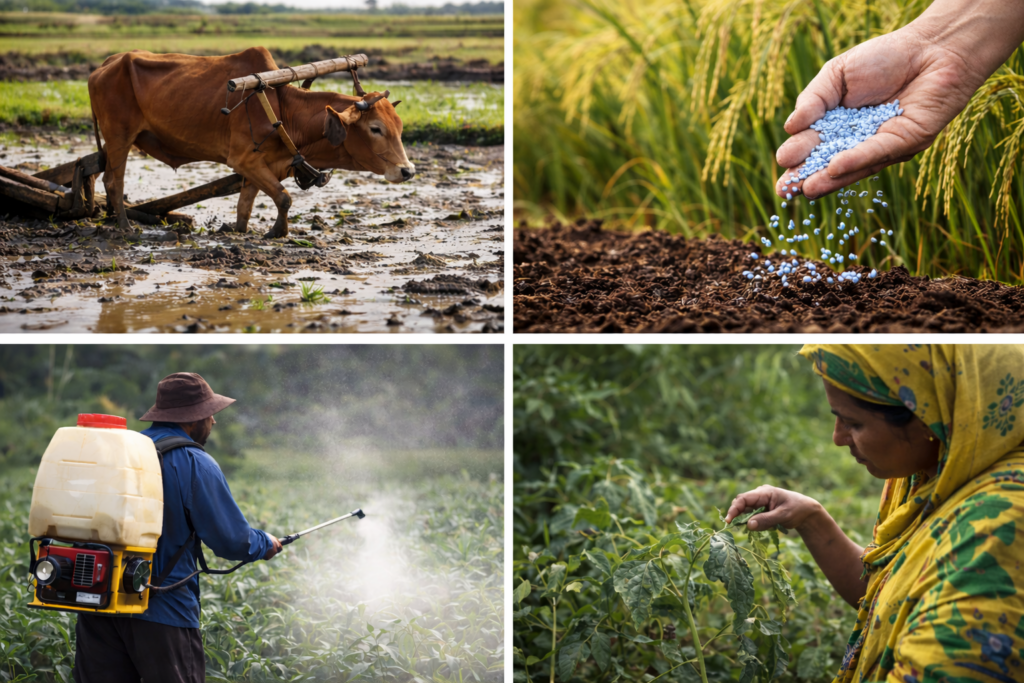
For ages, global agriculture was dependent on traditional farming practices. Crop production was constrained by frequent climate disasters and limited technological innovation. Many developing countries, including Bangladesh, suffered periodic famines as food production lagged population growth. Conventional techniques of rain-based irrigation, organic compost made from food waste, animal manure, and crop residues, and land plowing with oxen were predominantly used. These customs were also influenced by lunar cycles, seasonal rhythms, and indigenous community knowledge passed down through generations. Farmers typically planted local seed varieties, and very little modern machinery or fertilizer was used. Despite lower yields, crop cultivation was remarkably sustainable as soil quality remained intact.
The green revolution of the 1970s, which was initiated in Mexico, paved the way to contemporary agriculture and the introduction of high-yield crop varieties. These seeds tend to mature faster and are more resistant to pests and diseases. Such varieties promised ample harvests, and farmers could plant more crops per year for optimal land use. However, HYV crops rely on chemical fertilizers and pesticides, and the application of synthetic fertilizers, particularly urea, ammonium, potassium, and phosphorus, eventually became essential to support plant growth. Farmers also had to add a variety of insecticides, herbicides, and fungicides to assist such seed yields. Gradually, they noticed various problems: soil acidity, declining fertility, water contamination, and the emergence of new pests.
In addition, production tends to decline despite increasing use of fertilizers and pesticides. This ‘yield stagnation’ became a major challenge in many regions where the initial benefits of the Green Revolution were observed. Perhaps one of the most vital concerns of this trend is degradation in soil health. While traditional crop rotation restored soil health through crop diversity, the radical practice of rice-wheat production pressurized soil conditions without proper replenishment. Before the development of contemporary methods, plant diseases were rare, and pests were managed by hand or through companion planting. However, because the same crops were cultivated in the fields year after year, several fungal infections rapidly spread. Pests became resistant, which aggravated production despite higher pesticide use and rising farming costs.
The cost of modern agriculture extends beyond ecological risks and also poses challenges to food quality and human health. Farmers and their family members are in the high-risk group, since long exposure to noxious chemicals can cause acute and chronic health diseases. Moreover, harvested crops with toxic residues enter the human body when consumed as food. These foods become responsible for disrupting health conditions, creating respiratory and reproductive issues, along with certain cancers, like leukemia and lymphoma. Vegetables and fruits sold to consumers are also vulnerable; according to a consumer report, 20% of foods contain chemical residues that remain even after washing or scraping (Roberts, 2024). Additionally, these leftover chemicals are frequently carried to neighboring waterbodies by rain, where they damage the marine species by introducing pollutants into rivers, lakes, and wetlands. The chemical residues also have the potential to leak into groundwater reserves, contaminating freshwater supplies and endangering biodiversity.
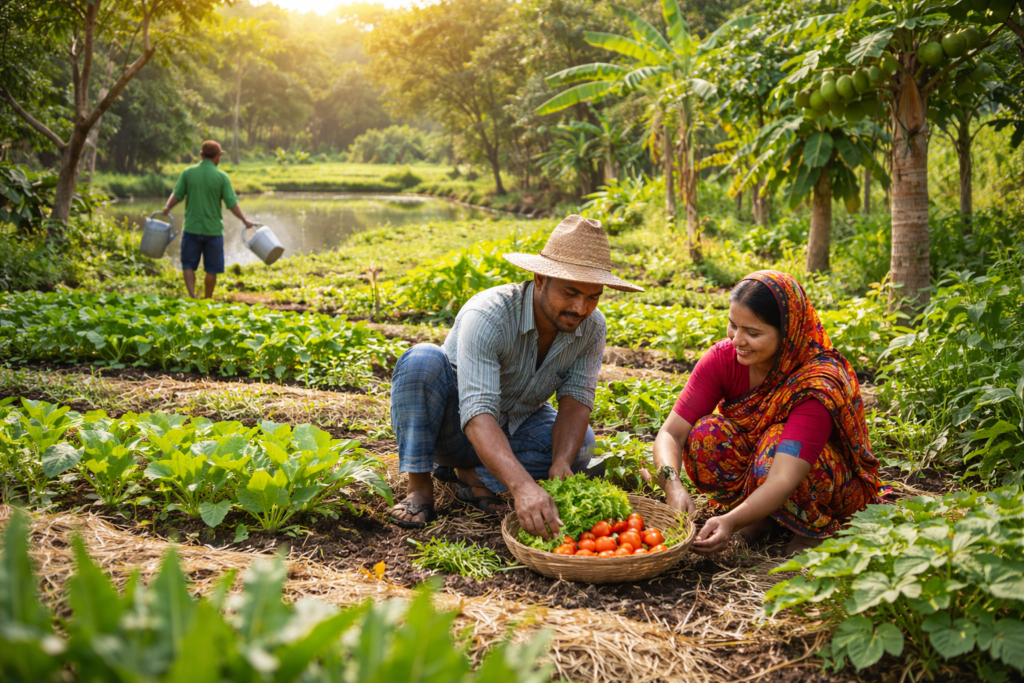
Healthy soil is essential for regenerative agricultural practice. Excessive use of synthetic fertilizers impairs soil nutrients, reduces beneficial microorganisms, and alters soil pH. As a result, soil becomes compacted and is unable to nourish plant growth by supplying them with the nutrients they need to flourish. Coupled with this is the economic strain on small-scale farmers, as farming costs continually rise. It is high time that agriculture practitioners move towards climate-resilient practices- applying natural methods to boost soil fertility, crop rotation to restore carbon sequestration, and no tillage for rejuvenating its nutrition. Farmers should also learn to harvest water through rainwater storage, drip irrigation, and mulching, along with an integrative pest management system to combat plant illnesses and safeguard human health.
Another way for Bangladesh to combat natural disasters is to adopt agroforestry. Combining trees with crop cultivation can not only enhance biodiversity but also protect against soil erosion and climate catastrophes such as floods and cyclones. Along with these efficient mechanisms, Bangladesh must look forward to creating a remarkable shift in agriculture for the next generation.
References
Green Revolution: Impacts, achievements, and shortcomings. (2023, April 6). GeeksforGeeks. https://www.geeksforgeeks.org/macroeconomics/green-revolution-impacts-achievements-and-shortcomings/
Mahmud Arnob, N. A. (2022). Green Revolution and an overview in Bangladesh. ResearchGate. https://www.researchgate.net/publication/366200665_Green_Revolution
How green agriculture bolsters Bangladesh’s climate resilience. (2024, November 27). UNDP Bangladesh. https://www.undp.org/bangladesh/blog/how-green-agriculture-bolsters-bangladeshs-climate-resilience
Roberts, C. (2024, April 18). We found unhealthy pesticide levels in 20% of US produce – here’s what you need to know. The Guardian. https://www.theguardian.com/environment/2024/apr/18/what-is-pesticide-safety-organic-fruits-vegetables