

Moulvibazar — October 2026
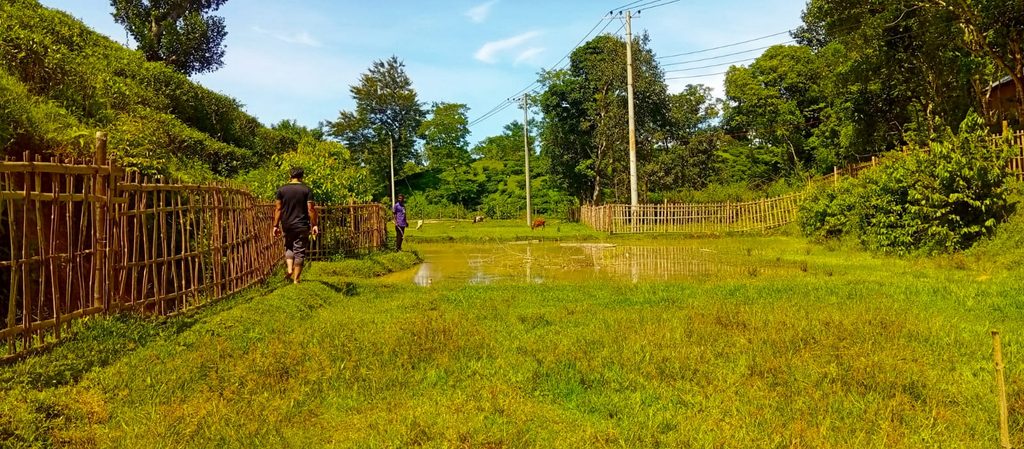
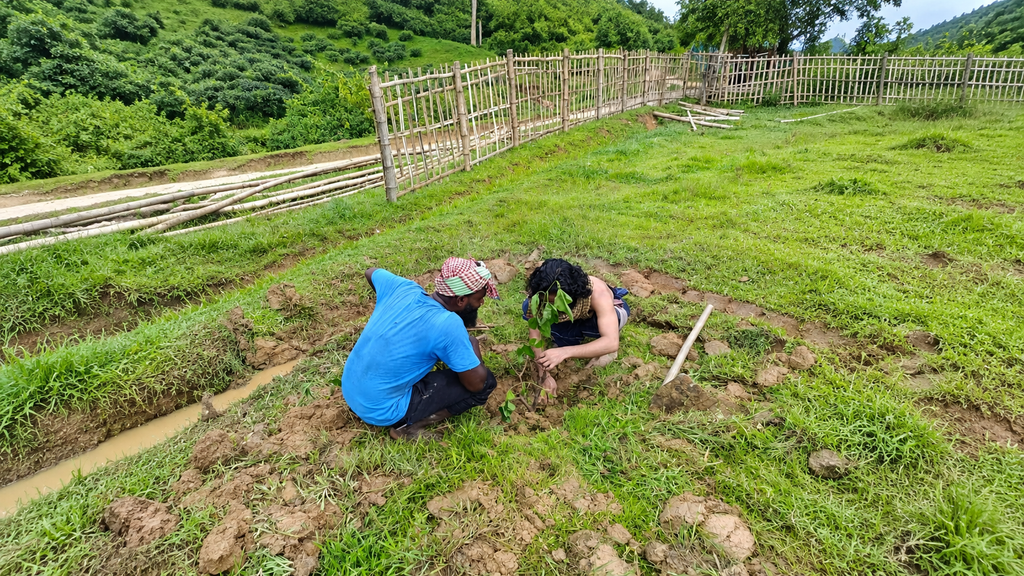
Sukun Regenerative Culture has begun winter cultivation on our approximately 0.3-acre leased land in Moulvibazar, Sylhet.
This marks another practical step in Sukun’s journey toward creating small, living landscapes where food production, ecological learning, permaculture, and regenerative practice can come together.
Starting with a Simple, Practical Garden
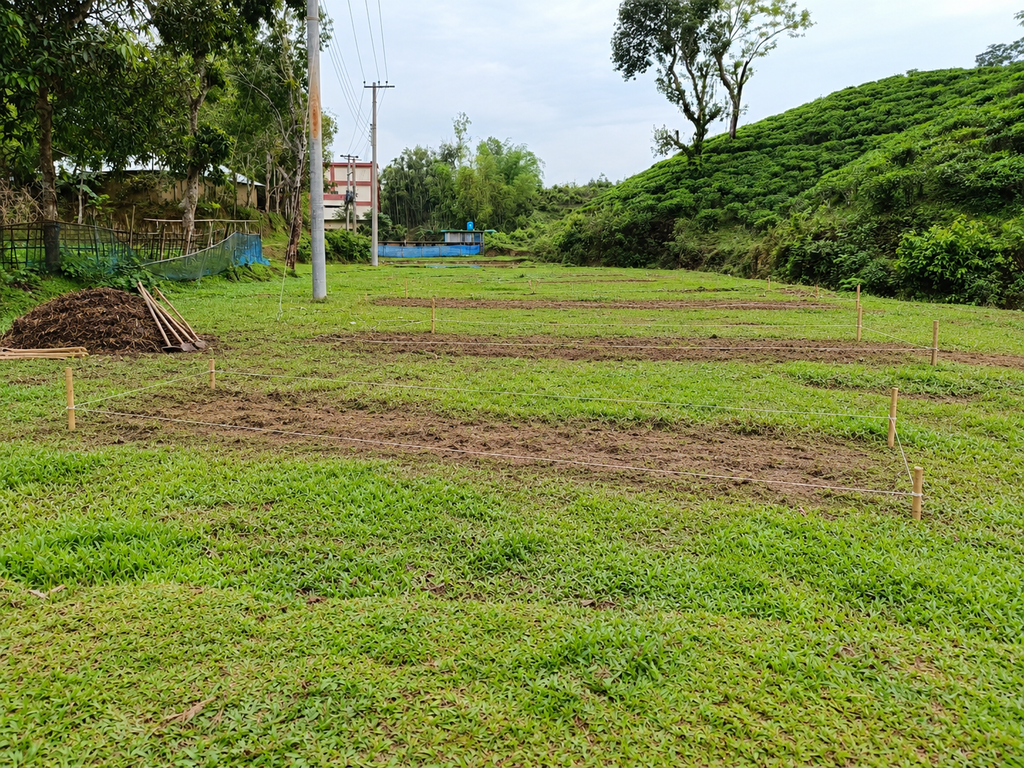
For the first season, our intention is to keep the garden simple, productive, and manageable.
The better-drained areas of the land will be used primarily for seasonal vegetables and mixed planting. Our winter cultivation will include crops such as radish, spinach, coriander, lettuce, tomato, chilli, beans, eggplant and pumpkin, alongside other suitable seasonal vegetables.
We are also introducing pigeon pea and other locally suitable leguminous plants as part of the garden. Alongside providing edible harvests, these plants can contribute to a more diverse growing system, provide biomass, help cover the soil, and support soil fertility through their association with nitrogen-fixing bacteria.
Rather than treating the garden as a collection of isolated monoculture beds, we will gradually experiment with mixed and guild-style planting, where compatible crops can share space and provide different functions.
Herbs, Useful Plants and a Papaya Circle
A small part of the site will be dedicated to useful and medicinal plants, including tulsi, lemongrass, aloe vera, ginger, turmeric, and mint.
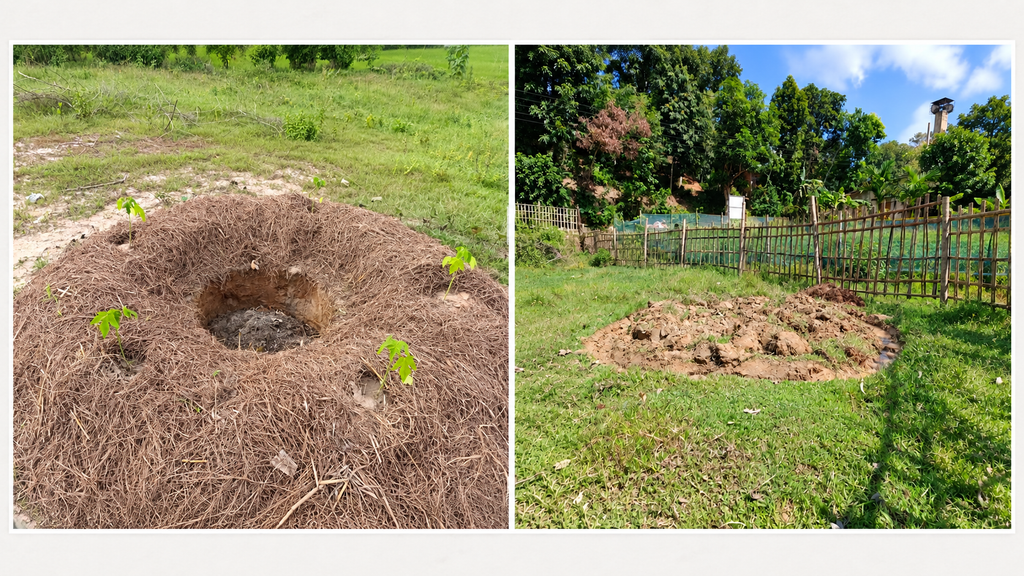
We also plan to establish a Papaya circle as one of the garden’s simple permaculture features. The papaya circle will provide a way to combine papaya production with organic matter recycling and nutrient cycling within the garden.
Working With the Wet Part of the Land
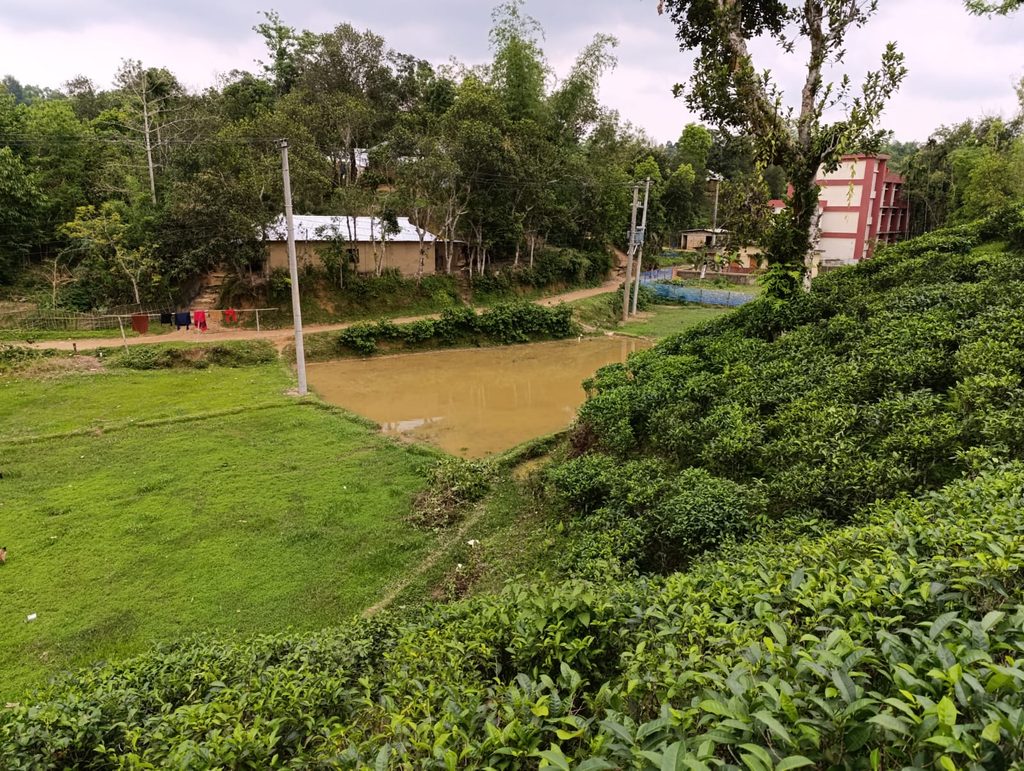
One section of the site naturally remains wetter than the rest of the land.
Instead of trying to make every part of the site dry and identical, we plan to use one wet plot for water-loving and water-tolerant vegetables. This allows the design to respond to the existing character of the land rather than working against it.
Building Soil, Not Just Growing Crops
The garden will also incorporate simple practices such as composting, mulching, drainage management, and efficient watering.
Because the site is being managed with limited labour, the system is intentionally being designed so that regular maintenance remains realistic. Our local team member Saful will play an important role in caring for the garden between our visits.
For us, success is not simply about producing as many vegetables as possible. It is about developing a garden that becomes healthier, more understandable, and easier to manage with each season.
A Living Place for Learning
Over time, we hope this small garden can also contribute to the work of Sukun Academy Without Walls.
The land can become a place where learners experience soil, water, plants, decomposition, seasonal cycles, and regenerative growing directly—not only as ideas, but as living processes.
This winter cultivation is therefore only a beginning: a season of planting, observing, learning and gradually regenerating the land.
Sukun Regenerative Culture
From Peace to Regeneration