
Anxiety, Disconnection and the Need to Rebuild Our Relationship with the Living World
There is a strange contradiction at the heart of modern life. We have created societies capable of extraordinary things. We can communicate across continents in seconds, travel enormous distances, access information instantly, and organize our lives with a level of efficiency previous generations could hardly imagine. Yet at the same time, many people feel exhausted, restless, overstimulated, lonely, and increasingly anxious. We often treat these experiences as personal problems, as though something inside the individual has failed. But perhaps part of the problem lies elsewhere. Perhaps some of our distress is a reasonable response to environments and ways of living that have moved too far from the conditions in which human beings naturally developed.
Martha Beck raises this possibility in Beyond Anxiety, particularly in the section she calls “The Unnatural Ways of Our Society.” She reflects on how human beings evolved in close relationship with daylight, darkness, weather, seasons, physical movement, family, community, plants, animals, food, and the landscape itself. Modern life, by contrast, increasingly takes place indoors, under artificial light, according to clock time, surrounded by screens, deadlines, competition, and constant information. Beck’s discussion provides a useful starting point, but for Sukun the question goes further: what happens when disconnection from nature becomes so ordinary that we no longer recognize it as disconnection at all?
Living by the Clock, Forgetting the Rhythm

For most of human history, life was shaped by rhythms that came from outside us and within us at the same time. Darkness encouraged rest. Morning light encouraged movement. Seasons shaped food, work, travel, and community life. Hunger, tiredness, heat, cold, and changing weather all influenced the pace of the day. Human beings lived much more closely within the cycles of the natural world, not because those lives were easy, but because nature was impossible to ignore.
Modern life has changed this relationship. We wake because an alarm sounds, not because our bodies are rested. We eat because a schedule tells us it is lunchtime. We continue working when we are tired because the deadline remains. Artificial light extends the day, digital devices keep our attention active late into the night, and the calendar often becomes more authoritative than the body. There is nothing inherently wrong with clocks or schedules; they make complex societies possible. The problem begins when we organize life so completely around them that we stop hearing the quieter rhythms of the body and the seasons.
At Sukun, this raises an important question. What would it mean to design learning, work, rest, and community life in ways that respect both structure and natural rhythm? Perhaps regeneration is not about abandoning discipline, but about creating forms of discipline that remain connected to the realities of the body, the land, and the changing world around us.
The Artificial Environment We Now Call Normal

Many people now spend most of their waking hours inside built environments. We move between homes, offices, classrooms, vehicles, shopping centres, and digital spaces. These environments are often defined by straight lines, flat surfaces, artificial lighting, processed materials, and controlled temperatures. They are efficient and predictable, but they are very different from the complex, changing, sensory environments in which human beings spent most of their history.
This may help explain why people often seek nature when they need to recover. We go to forests when we feel overwhelmed, sit beside water when we need clarity, visit gardens when we need calm, and travel to hills or rural landscapes when city life becomes too heavy. We usually describe these experiences as escapes from normal life. But perhaps the deeper truth is that they are moments of return. The nervous system may be responding to something familiar: changing light, irregular forms, moving water, open horizons, plant life, wind, birds, and the absence of constant human-made stimulation.
The irony is that many activities once woven into ordinary life are now described as wellbeing interventions. Gardening becomes horticultural therapy. Walking in forests becomes forest bathing. Sitting quietly becomes mindfulness. Growing food becomes therapeutic. Spending time outdoors becomes nature-based wellbeing. These practices are valuable, but perhaps nature did not suddenly become therapeutic. Perhaps modern life became increasingly separated from the conditions that once helped regulate us naturally.
What This Means for the Way Children Learn
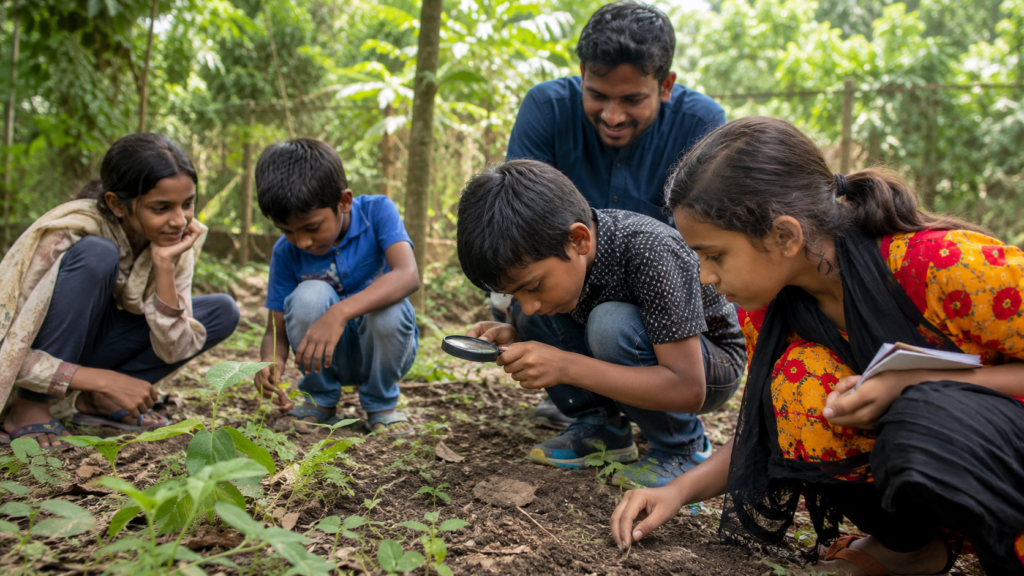
The same disconnection is visible in education. Children are naturally curious, physical, sensory beings. They learn by touching, moving, experimenting, imitating, asking questions, making mistakes, and participating in the world around them. Yet much formal education requires them to spend long hours indoors, sitting still, focusing narrowly, and absorbing information that has already been separated from the places and processes it describes.
There is a meaningful difference between telling a child that plants need soil, water, sunlight, and nutrients and allowing that child to grow something. The first can communicate accurate information. The second creates an experience. A child who plants a seed begins to notice time, weather, insects, moisture, failure, patience, and responsibility. The child may begin to understand that life does not follow a worksheet. Plants respond to relationships, conditions, and care.
This is not an argument against books or classrooms. Formal knowledge matters. But education becomes thinner when knowledge is disconnected from experience. At Sukun, we are interested in what happens when those two are brought together again. A garden can support science. A forest can deepen observation. A water system can teach ecology, mathematics, and responsibility. Compost can teach decomposition, waste, soil, and transformation. Learning becomes richer when the world itself is allowed to participate.
When Productivity Becomes the Measure of Life

Modern society also places extraordinary value on productivity. We are encouraged to achieve more, move faster, compete successfully, and continually improve our performance. These abilities have produced many benefits, but they can become harmful when productivity is treated as the central measure of human worth.
A person can be highly productive and deeply unwell. Someone can achieve professional success while having little time for family, community, rest, creativity, or meaningful contact with the natural world. A child can perform well academically while becoming anxious, exhausted, and disconnected from curiosity. A community can become economically successful while damaging the water, soil, and ecosystems on which its future depends.
Beck’s critique is useful here because she shows how cultures can normalize anxiety by rewarding constant pressure, competition, and control. When everyone is expected to remain alert, ambitious, and afraid of falling behind, anxiety stops looking like a warning and starts looking like responsibility. Rest may begin to feel lazy. Slowness can feel unproductive. Time spent growing food, caring for land, talking with neighbours, or simply observing may appear wasteful because those activities do not always produce immediate measurable outputs.
A regenerative culture would ask a different set of questions. Is our work meaningful? Are our relationships healthy? Are we taking more from the land than we return? Do children have opportunities for wonder? Do people have time to rest and reflect? Are we building communities that help people feel secure, or systems that keep them permanently afraid of losing their place?
Anxiety Is Not Only Personal
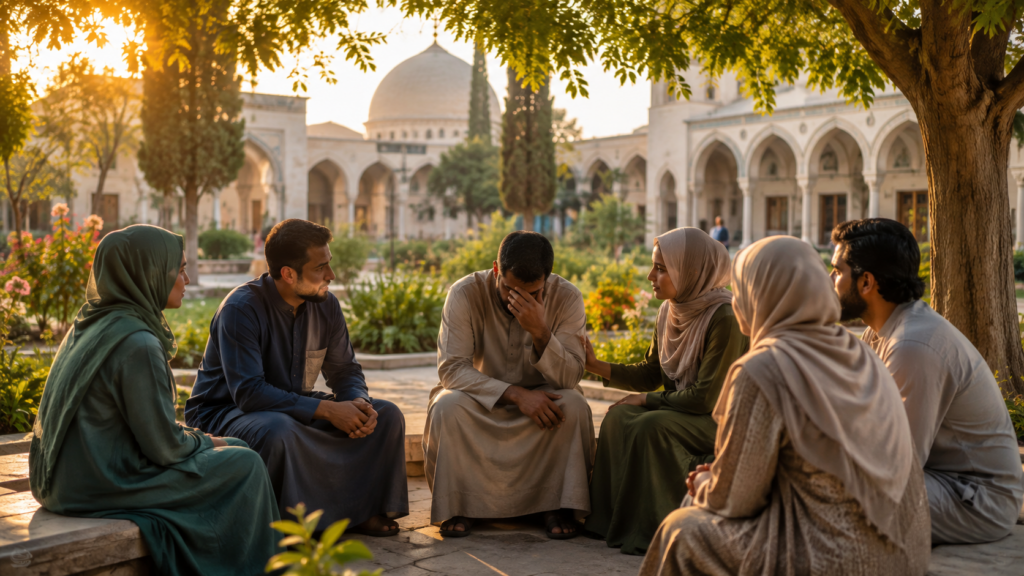
One of the most important ideas in Beyond Anxiety is that anxiety can move between people and the systems they create. An anxious workplace can make employees more anxious. An anxious school can make both teachers and students more reactive. An anxious family can create patterns of control that increase tension for everyone. Anxiety becomes circular: people create systems from their fear, and those systems generate more fear in the people living within them.
This changes the way we think about wellbeing. It is not enough to teach individuals to breathe slowly, meditate, exercise, or manage their stress while leaving the larger environment untouched. These practices may help enormously, but if the same person returns to constant overwork, noise, isolation, artificial stimulation, and insecurity, the underlying conditions remain.
From a regenerative perspective, we therefore need to ask two questions at the same time. How can individuals become more resilient and grounded? And how can we create environments that demand less constant recovery from them? The second question takes us into the territory of design: the design of education, workplaces, neighbourhoods, gardens, communities, and daily routines.
Reconnection Is Not a Return to the Past
It would be easy to romanticize earlier ways of life and imagine that everything was better before modernity. It was not. Human societies have always experienced hardship, disease, conflict, injustice, and insecurity. Modern medicine, education, science, and technology have brought enormous benefits.
The task is not to go backward. It is to bring neglected dimensions of human life forward with us.
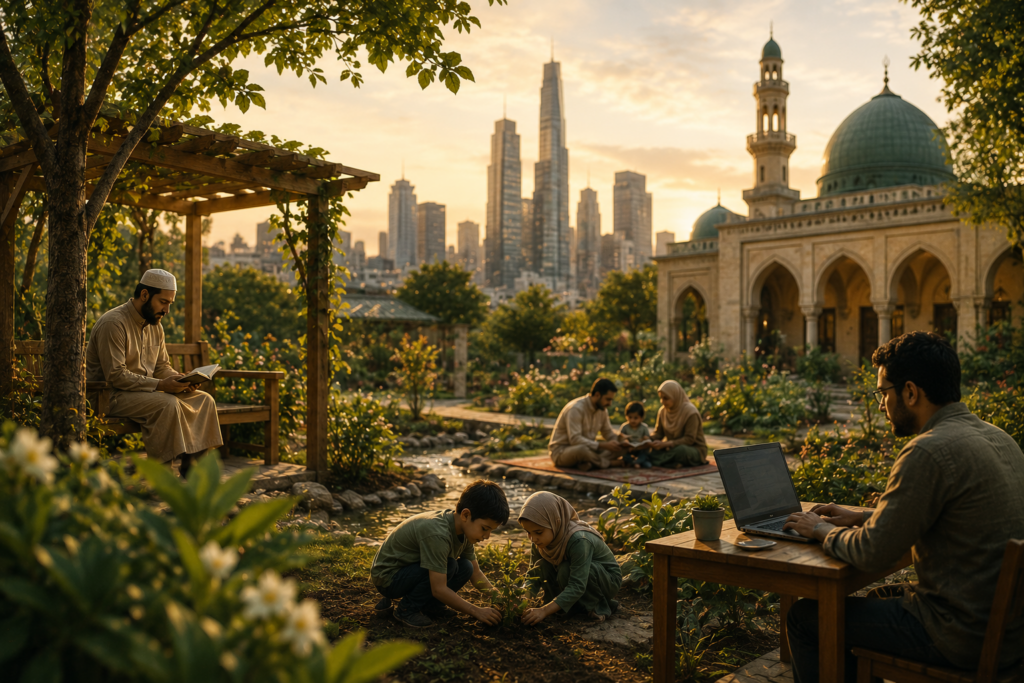
A more balanced modern life can include technology while still protecting time away from screens. It can include formal education while giving children meaningful outdoor experience. It can include professional work while respecting rest and family. It can include cities while creating gardens, trees, open spaces, local food systems, and opportunities for community. It can value efficiency without making efficiency the purpose of existence.
The question is not whether we must choose between nature and modernity. The question is whether modernity can remember that human beings remain part of nature.
Small Acts of Reconnection
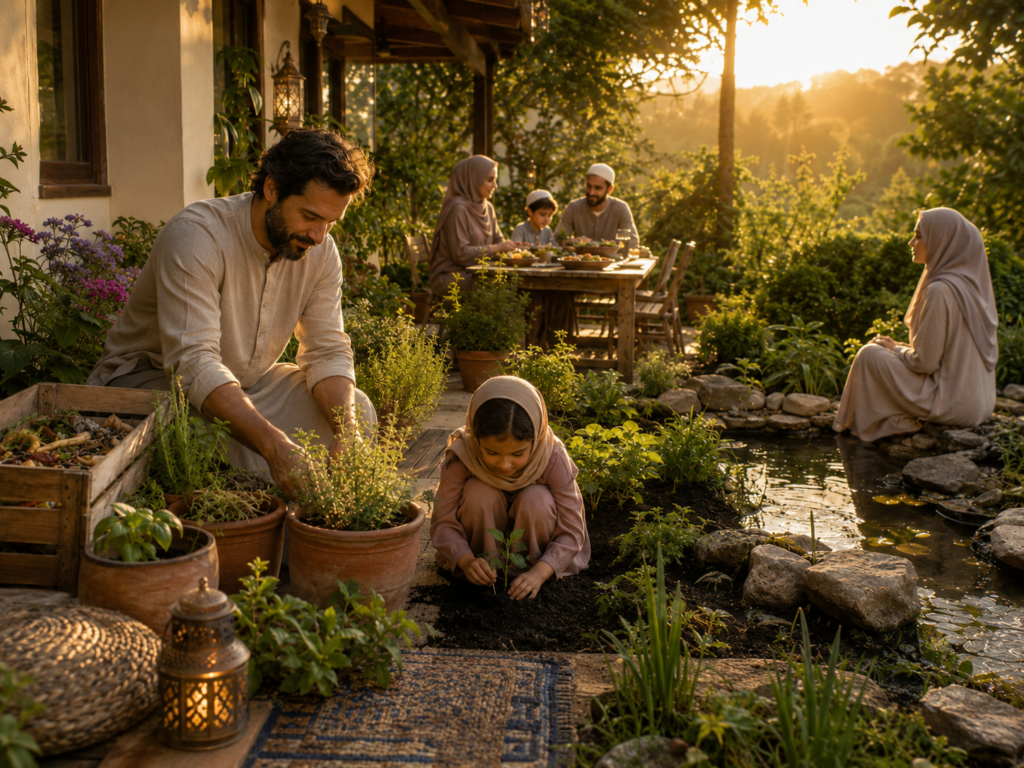
One of the most memorable examples in Beck’s discussion involves an anxious professional who begins growing vegetables and herbs in her apartment. The action is simple, yet it reconnects her with sensory experience, food, memory, family culture, and the body. As her relationship with these small living things develops, she also begins creating healthier boundaries around the professional life that had been exhausting her.
There is something important in this. Regeneration does not always begin with large land projects, policy changes, or dramatic lifestyle transformations. It can begin quietly. A few herbs outside a kitchen window. A compost pile. A walk before looking at a phone. A child planting a seed. A family eating something they grew. A person sitting beside water without trying to accomplish anything.
These acts do not solve every problem. But they can restore attention. And attention is often the beginning of a relationship.
Perhaps one useful question when we feel overwhelmed is not only, “How do I stop feeling this way?” but also, “What have I become disconnected from?” Sometimes the answer may be rest. Sometimes community. Sometimes meaningful work, creativity, spirituality, the body, or the natural world. The answer will differ from person to person, but the question opens a wider understanding of wellbeing.
The Sukun Perspective: Learning as Reconnection
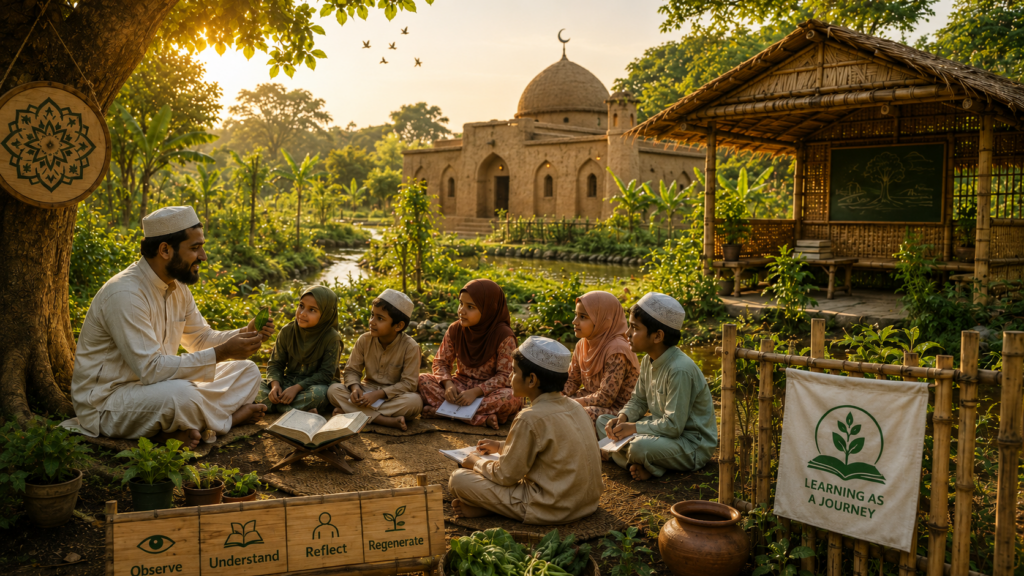
For Sukun, this conversation connects directly with the idea of Sukun Academy Without Walls. Our purpose is not simply to move classroom lessons outdoors. It is to explore what happens when the relationship between learning and the living world is restored.
We describe this through three ideas: Nature as Teacher, Landscape as Classroom, and Learning as a Journey. A forest is not simply a location where a lesson takes place; it can teach attention, diversity, interdependence, and change. A garden is not only a place where vegetables grow; it can teach patience, soil, food, responsibility, water, insects, and care. A medicinal plant can open a conversation connecting ecology, culture, local knowledge, and human wellbeing. A quiet sitting place can become part of education because reflection is also a form of learning.
This is why our learning process moves through Observe → Understand → Reflect → Regenerate. Observation asks us to encounter what is actually present before trying to control it. Understanding brings knowledge and context. Reflection asks what the experience means and how it changes our relationship with ourselves and the world. Regeneration turns that learning into care, responsibility, and action.
The goal is not simply to produce people who know more about nature. It is to nurture people who feel that they belong within a living world and therefore have some responsibility toward it.
Toward a Regenerative Culture
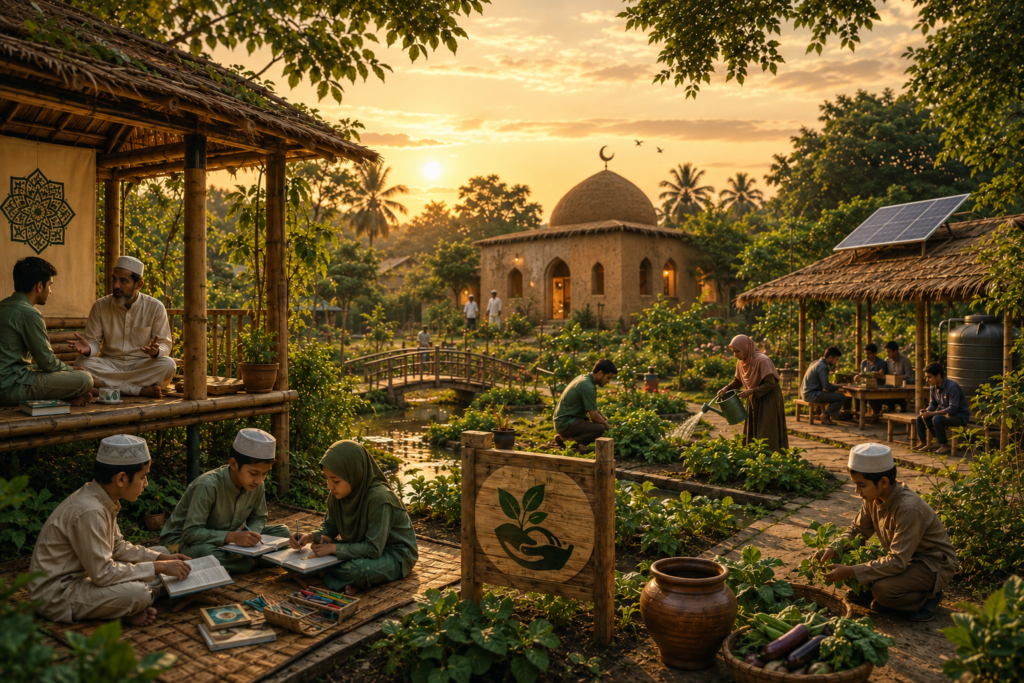
The deeper work of Sukun goes beyond individual wellbeing or environmental education. We are interested in a larger cultural question: How might we live in ways that allow both people and the places around them to become healthier?
This is where regeneration becomes more than an ecological technique. It becomes a cultural practice. It asks us to reconsider how we learn, how we work, how we grow food, how we use water, how we relate to community, how we respond to anxiety, and what we consider a successful life.
Modern society has given us remarkable knowledge and extraordinary tools. The challenge is not to reject those achievements. The challenge is to use them without forgetting the older forms of intelligence carried by the body, the land, community, and the living systems that sustain us.
Perhaps some of what we now call anxiety is telling us that something important has been neglected.
Perhaps the answer is not simply to become better at tolerating disconnection.
Perhaps we also need to become better at reconnecting.
And sometimes that begins with something remarkably simple: stepping outside, paying attention, and allowing the living world to become part of our lives again.
References
Beck, M. (2025). Beyond Anxiety: Curiosity, Creativity, and Finding Your Life’s Purpose. Viking.
Bratman, G. N., Anderson, C. B., Berman, M. G., et al. (2019). Nature and mental health: An ecosystem service perspective. Science Advances, 5(7), eaax0903.
Kuo, M., Barnes, M., & Jordan, C. (2019). Do experiences with nature promote learning? Converging evidence of a cause-and-effect relationship. Frontiers in Psychology, 10, 305.
Twohig-Bennett, C., & Jones, A. (2018). The health benefits of the great outdoors: A systematic review and meta-analysis of greenspace exposure and health outcomes. Environmental Research, 166, 628–637.
World Health Organization Regional Office for Europe. (2016). Urban Green Spaces and Health. World Health Organization.